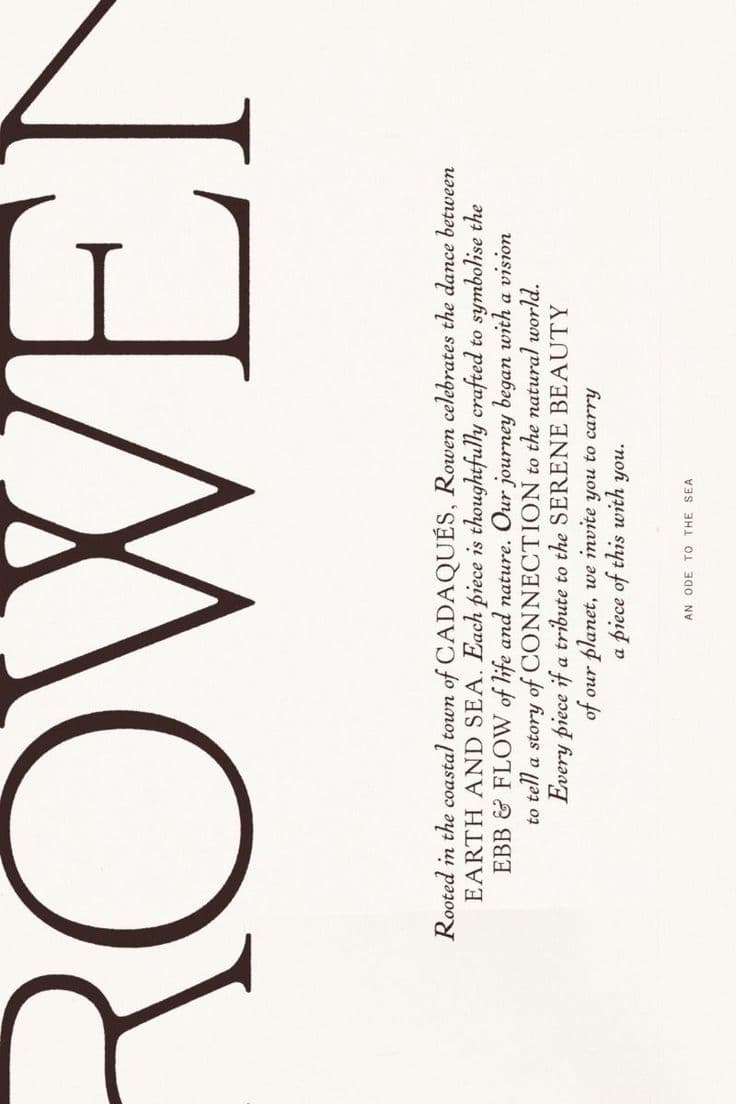
The serif is having a moment, and I want to be careful about how I celebrate it — because what's interesting is not the serif itself but what the return to serif typography represents.
The screen has trained us to scan. The unit of digital reading is not the paragraph or the sentence — it is the glance. We read in interruptions. The interfaces we inhabit are designed to accelerate this, to move our eyes faster, to keep us scrolling.
Editorial serif typography does the opposite. A well-set serif column at a generous measure, with proper leading and spacing, physically slows your reading. The letterforms have enough complexity — enough of what type designers call 'color' — to reward sustained attention. They were designed for the page, which asks something different of you than the feed.
When I choose a typeface for a brand, I am making an argument about what kind of attention the brand deserves and can sustain. A brand built on Cormorant Garamond or Canela is making a different argument than one built on Neue Haas Grotesk — not better or worse, but different, with different implications.
The brands I find most interesting right now are the ones using typography as a deliberate act of resistance — choosing the typeface that will slow you down, that will ask you to stay a moment longer, that refuses to compete for the fraction of a second your eye gives the feed.